
The vicious side of plants
When we think of plants, what comes to our minds is a vision of luscious green leaves and beautiful, sweet smelling flowers. On the contrary, this article discusses three of the plants that change this stereotypical image.
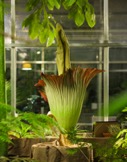
1) Corpse flower (Amorphophallus titanium)is native to Western Sumatra. Being one of the world’s largest and rarest flowering structures, it leaves people awestruck with its gigantic size and unimaginably foul odour. As the name suggests, this flower smells like a rotting corpse or carcass while it is blooming. The smell, colour as well as the temperature of the corpse flower are meant to attract its pollinators which are primarily carnivorous insects like dung beetles and flesh flies. Flowers aren’t just pretty and nice smelling!
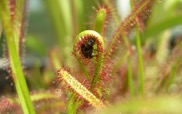
2) Cape sundew (Drosera capensis) is native to South Africa. This sundew species is a rosette forming carnivorous plant. These are predominantly perennials with pinkish flowers and upper surface of leaves covered with trichromes or plant hairs which are responsible to trap insects by exuding a sticky substance. These tentacles are nectar tipped. Once the insect is trapped, the leaves slowly curl and release digestive enzymes which eventually dissolves the insect absorbing the liquid and nutrient rich materials. The whole process is completed within 30 minutes.
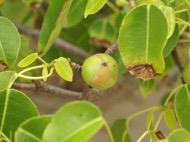
3) Manchineel (Hippomane mancinella)is native to the tropical north and south of America. Also known as poison guava, this tree is famous for its poisonous fruits. It bears sweet smelling, greenish-yellow apple like fruits. It has been rated as the world’s most dangerous tree in the Guinness book of records. The two main toxins of its fruit include hippomanin A and B. The consumption of its fruit can agonise an individual and may even lead to death in a few hours. Contacting the smoke from the tree’s burning wood can cause blindness and skin burning. It also possesses a risk to the people who seek its shade as even standing close to the tree can lead to asphyxiation which is a state of oxygen deprivation or suffocation.
In conclusion, with unknown significance to humans, these plants also have a dark side and do not fail to leave us astonished.
Bibliography
Bradford, A., 2017. Corpse flower: Facts about the smelly plant. [Online]. New York: Livescience
Available at: https://www.livescience.com/51947-corpse-flower-facts-about-the-smelly-plant.html
[Accessed 20th April 2019].
Pappas, S., 2015. Photos: Stinky ‘corpse flowers’ bloom. [Online]. New York: Livescience
Available at: https://www.livescience.com/51922-corpse-flower-photos.html
[Accessed 20th April 2019].
Petruzzello, M., 2014.Sundew. [Online] Encyclopaedia Britannica inc.
Available at: https://www.britannica.com/plant/sundew
[Accessed 20th April 2019].
Taiwo, T., 2019. Cape sundew. [Online]
Available at: https://capesundew.weebly.com/
[Accessed 20th April 2019].
Carnivorous plants , 2017. How did carnivorous plants evolve. [Online] England: Tom’s carnivores
Available at: https://www.carnivorousplants.co.uk/blog/how-did-carnivorous-plants-evolve/
[Accessed 20th April 2019].
Enclycopaedia Britannica, 2019. Manchineel. [Online] Encyclopaedia Britannica inc.
Available at: https://www.britannica.com/plant/manchineel
[Accessed 20th April 2019].
Minter, D., 2018.The Manchineel Tree [Online]. San Franasisco: HubsPages inc.
Available at: https://owlcation.com/stem/The-Manchineel-Tree
[Accessed 20th April 2019].

 THE BIO BOOK
Called by to leave my thanks for your recent decision to follow Learning from Dogs. Thank you!
LikeLiked by 1 person
My pleasure!
LikeLike
Interesting article!
LikeLiked by 1 person
Thank you!
LikeLike